The Underwhelming Claude Code to Figma
Cover image this issue comes from Sart Sans, newly released by Anchor Dock Studio.
Two weeks of content packed into one issue this time.
LobsterAI
NetEase Youdao open-sourced their desktop-level agent "LobsterAI." Tested it immediately after release — ran several tasks, and the product thinking and implementation details are surprisingly complete. The experience is more solid than expected. Overall, this "Chinese OpenClaw" is worth a try.
Honest advice for most non-technical users: stop messing around with terminals. You don't need a Mac Mini or VPS. A ready-to-use desktop agent like this works great — genuinely safer and easier than OpenClaw. Had a task created and running within minutes. The advantages: low interaction barrier (GUI + conversational), clear security model (local-first + sandboxed), extensible capabilities (multi-model switching, built-in skills, scheduled tasks, long-term memory), comprehensive workflows (documents/PPTs/data processing to automation), and solid integration with local productivity tools for remote computer control.
Claude Code to Figma
Figma finally released Claude Code to Figma — their fully revamped MCP. The official blog details how to convert production code into editable Figma design files. But people quickly snapped out of it: why do we even need design files anymore? Alex Barashkov wrote a piece arguing that Figma needs to bring in Agentic AI to automate repetitive design work. Right now Figma has locked itself onto the canvas, but that static canvas is painfully disconnected from development and production. Compared to other AI tools, Figma's efficiency no longer meets the needs of modern design engineers.
Meanwhile, Variant UI shipped a Style Dropper — an AI tool that absorbs the visual style of any object and applies it to your design. Setting aside whether it actually works well, the interaction and inventiveness alone stand in sharp contrast to Figma's stagnant, uninspired trajectory.
Resources
Kumo
A UI component library from Cloudflare, offering Badge, Button, Dialog, Table, and 30+ components with CLI installation and Figma resources. The logo even uses Chinese characters — watch the logo animation closely, it's quite clever.
Mockdown
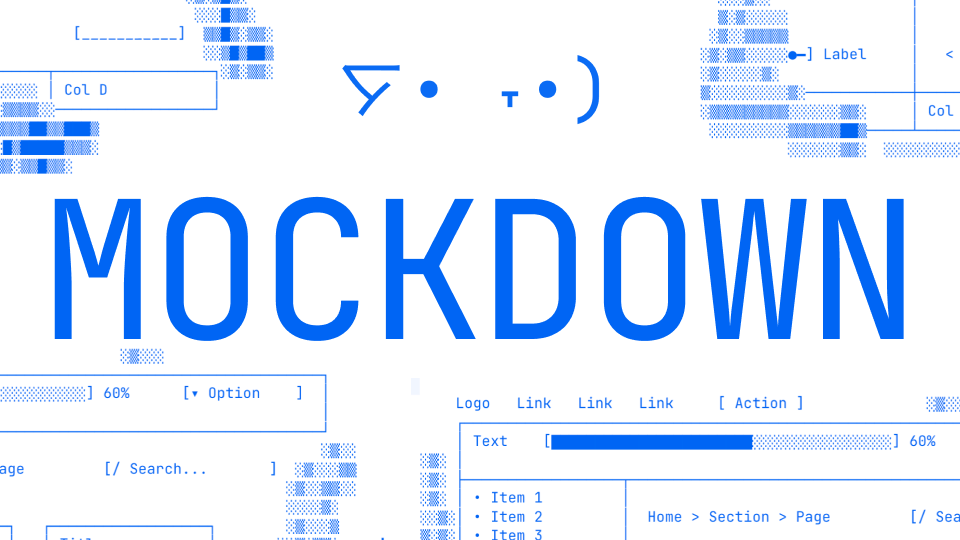
This one is genuinely inspired — an ASCII wireframe editor for sketching wireframes in plain text. It draws wireframes and accidental abstract art in equal measure.
Wiretext
Unicode Wireframe Design Tool — another one in a similar vein, also well executed.
More Resources
- micro. interactions - A collection of micro-interaction animation inspiration and code examples. https://micro.bossadizenith.me/
- Ruixen UI - 170+ free open-source React and Tailwind CSS components. https://ruixen.com/
- FragCoord.xyz - Online shader editor and fragment shader experimentation platform. http://FragCoord.xyz
- penflow - The recently popular handwriting signature animation library. https://penflow.cretu.dev/
- modern.css - A collection of modern CSS snippets and techniques. https://modern-css.com/
- goey-toast - React morphing-animation toast notification component. https://goey-toast.vercel.app/
- EaseMaster - CSS and spring easing curve generator with rich spring and bezier presets. https://easemaster.satisui.xyz/
- Liveline - Real-time data components inspired by Polymarket. https://benji.org/liveline
- Smooth Blur - Progressive blur CSS effect generator. https://smooth-blur.vercel.app/
- shadcn/ui Figma Kit - Figma component kit for shadcn/ui, including Pro modules and templates. https://www.shadcndesign.com/
- Very Good Components - A curated collection of high-quality UI components. https://www.goodcomponents.io/
- Sileo - A beautiful React toast notification component library. https://sileo.aaryan.design/
- ASCII Gen - ASCII animations for websites, $9.99. https://asciigen.art/
Cases
Antimetal
Looking at sites like this used to feel unremarkable. Now, after being saturated with AI-generated work, coming back to something like this — it's genuinely beautiful.
Prime Intellect
A comprehensive compute and infrastructure platform for training, evaluating, and deploying agent models. The site's imagery and overall aesthetic immediately telegraph what they do.

NORMIES
Crypto culture is insufferable, but the design and taste coming out of the international crypto scene is undeniably impressive.
More Notable Designs
- Aeonik Soft - CoType's rounded sans-serif typeface family. https://cotypefoundry.com/our-fonts/aeonik-soft
- Vercel Startups - Vercel launched a new startups page. https://vercel.com/startups
- Linear - Refreshed homepage — changes are subtle. https://linear.app/homepage
- Tambo - AI component generation platform for rapid UI building. https://tambo.co/
- Searching for Birds - A beautifully crafted interactive bird data visualization project. https://searchingforbirds.visualcinnamon.com/
- s.page - The founder of the former 3drops design studio built a new product — a personal page generator. The interaction design is well done. https://s.page
- Chronicle - The presentation tool also shipped a redesigned site. https://chroniclehq.com/
- GitBook - New site looks great too. https://www.gitbook.com/
- TrumpRx - The name gives it away — a US government site. Their in-house design studio operates at an remarkably high level. https://trumprx.gov/
- Unseen Studio - 2025 project retrospective. https://2025.unseen.co/
- Simile - Oil painting + motion effects for background imagery — refreshingly novel. https://www.simile.ai/
- type.lol - New site is solid. http://type.lol
Articles
Something Big Is Happening
A long-form piece by Matt Shumer, written for family and friends outside the tech industry. Drawing from personal experience, he describes how by February 2026 — after GPT-5.3 Codex and Opus 4.6 shipped — AI can independently complete all the technical work he used to do by hand. Describe requirements, leave the computer for four hours, come back to a finished product that needs zero revision. The article digs into the exponential pace of AI progress, the feedback loop of AI helping build its own next generation, and projected impact across law, finance, healthcare, and writing. His practical advice: spend one hour a day seriously using AI, become the most AI-literate person on your team as early as possible, and prepare financially.
Design for Transparent Screens
Google's design team shares the behind-the-scenes story of designing interfaces for AI glasses with transparent displays. The article centers on a new design system, Jetpack Compose Glimmer, detailing the disruptive challenges of transparent screens: black becomes transparent, traditional Material Design's light surfaces cause severe halation, and high-saturation colors virtually disappear against real-world backgrounds. The team redefined their design language around dark surfaces with bright content, adopted visual angles instead of pixels for measuring font size, optimized the optical size axis of Google Sans Flex for readability, and extended notification animations from 500ms to nearly 2 seconds to respect the user's attention rhythm.

Rebuilding a Design Career
Adrian Kuleszo shares his strategy for how he'd restart a design career in 2026. With AI democratizing foundational design work, he argues designers need to shift toward higher-level strategic thinking and enterprise-grade execution — transforming from pure visual producers into design consultants who understand business goals and drive growth, rather than staying at the pixel level.
Your Company Is Not a Filesystem
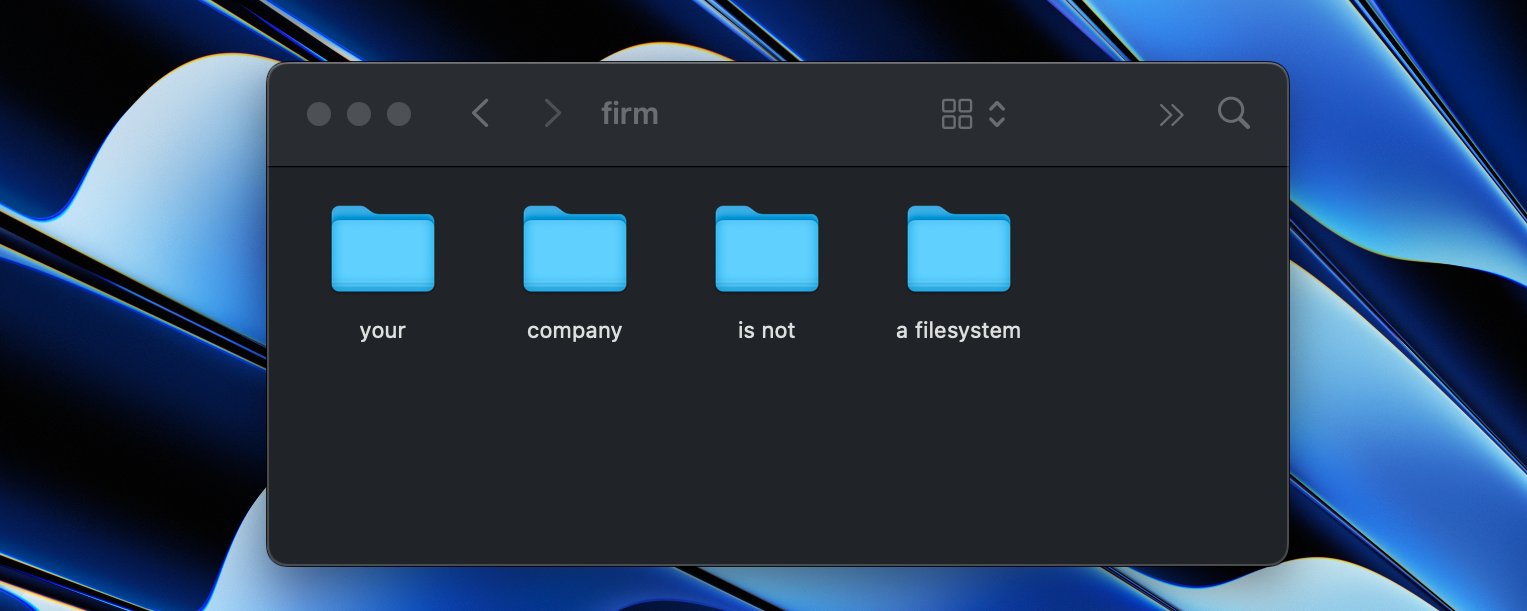
A thread by Anvisha (former Dropbox employee). She recalls the internal narrative at Dropbox in 2014 — "files are dead, the browser is the future" — later validated by Google Docs, Figma, and Notion. But now AI agents (Claude Code/Cowork, OpenClaw) are bringing "files" back, since agents work efficiently by simply pointing at local folders. However, she argues files alone aren't enough — agents need more context and structure. We need an entirely new software paradigm to house a company's knowledge and workflows.
Curated, translated, and edited from 丁一's DEX Weekly. Ding Yi is the co-founder of DEX, a design community. Former Head of Sketch China, former Design Director at 36Kr. A full-stack designer who writes questionable code, currently freelancing — probably Beijing's most well-known slash-career creative.