2026-05-01
AI Builders Digest — May 1, 2026
X / TWITTER
Andrej Karpathy (Former Tesla AI Director, OpenAI Founding Team)
Karpathy's Sequoia Ascent fireside chat is making the rounds. His core argument: LLMs are about far more than speeding up what already existed. Three new paradigms he flags — (1) menugen: apps fully engulfed by LLMs with zero classical code needed; (2) .md skills over .sh scripts: instead of writing a bash script to install software, just describe it in English and hand it to an LLM interpreter; (3) LLM knowledge bases: something fundamentally impossible with classical code because it requires computation over unstructured data from arbitrary sources. He also dives into the "jaggedness" of LLMs — why a single model can refactor 100k lines of code coherently yet hallucinate about car washes. The short version: you're either in the RL data distribution ("on rails") or you're off-roading in the jungle. Finally, the agent-native economy: decomposition of products into sensors, actuators, and logic across 1.0/2.0/3.0 paradigms, and the emerging skill set of agentic engineering.
Karpathy 还在推他那句最近反复引用的金句。核心论点:LLM 的价值远不止"加速已有工作"。他点名了三个新方向——(1) menugen:整个应用可以被 LLM 吞掉,不需要一行传统代码;(2) .md 技能取代 .sh 脚本:安装软件不需要写 bash 脚本,直接用自然语言描述扔给 LLM;(3) LLM 知识库:这是传统代码根本做不到的事,因为涉及对任意来源、非结构化数据的计算。关于 LLM 的"参差不齐"问题(同一个模型能重构 10 万行代码却会在洗车这种事上产生幻觉),他的解释是:要么在 RL 训练数据的轨道上运行,要么在丛林里用砍刀开路。最后提到了 Agent 原生经济——把产品拆解成传感器、执行器、逻辑,散落在 1.0/2.0/3.0 的计算范式中。
Sam Altman (CEO, OpenAI)
OpenAI shipped a big Codex upgrade — now handles non-coding computer work. Altman frames it as the next frontier: computer use that isn't just code generation. Also dropped "artificial goblin intelligence achieved" which predictably broke the internet (6,200+ likes).
OpenAI 给 Codex 做了大升级——现在不止能写代码,还能处理通用计算机任务。Altman 把这个定位成下一个前沿方向。另外那条"AGI 已实现"的玩笑推文不出意外地炸了,6200 多个赞。Sam 最近的风格越来越放松了。
https://x.com/sama/status/2049946120441520624
https://x.com/sama/status/2050021650641695108
Aaron Levie (CEO, Box)
Mandatory reading for anyone building software in the agent era. Levie's thesis: as agents become the biggest users of software, all software goes headless. The UI era ends; APIs win. His three-part framework for what comes next: (1) Seats still matter for people, but each seat comes with API usage on behalf of that user — agents need to work with your data seamlessly or you're DOA; (2) Agent seats make sense for stateful agents with their own workspace and permissions, but pricing them like human seats is nearly impossible — one company might use 1 agent, another 1,000; (3) Consumption pricing becomes dominant for headless use beyond seat allotments. The kicker: agents operating on data will dramatically exceed what humans do with their tools today. Every platform that goes headless will need this model.
如果你在 Agent 时代做软件,这篇必读。Levie 的核心判断:随着 Agent 成为软件的最大用户,所有软件都会变成无头(headless)模式。UI 时代结束,API 为王。他的三层框架:(1) 人类用户仍然按席位订阅,但每个席位都要附带 API 配额让 Agent 代为操作——如果 Agent 不能顺畅访问你的数据,你离死不远了;(2) Agent 席位适用于有独立工作空间和权限的有状态 Agent,但按人类席位定价几乎不可能——有的公司可能只用一个 Agent,有的用 1000 个;(3) 超出席位配额的用量走消耗式计费。最后他点出了关键:Agent 对数据的操作量会远超人类。每一个走向无头模式的平台都需要这套模型。

Ryo Lu (Design, Cursor)
Two things from Ryo this week. First: a demo of adding the Cursor SDK to ryOS — now he can edit his OS by just chatting. The future of operating systems as conversational interfaces, right there. Second, a sharp thread on opinionated vs. general-purpose design: "no opinion is opinionated." Every decision about what concepts exist, what's visible, what composes — that's already a worldview. His argument: great systems don't multiply products, they reduce concepts to their essence. Flexibility isn't the absence of opinion; it's the result of a strong opinion held in cohesion.
Ryo 这周发了两条值得关注的内容。第一,演示了把 Cursor SDK 集成到 ryOS,现在可以直接聊天改操作系统——这大概就是未来 OS 的样子。第二条是关于"有观点 vs. 通用设计"的深度思考:所谓"没有立场"本身就是一种强烈立场——只要决定哪些概念存在、什么可见、什么可组合,你就已经在表达世界观了。他的核心观点:伟大的系统不是堆产品,而是把概念简化到本质。灵活性不是没有立场,而是立场坚定后的自然结果。
https://x.com/ryolu_/status/2049872551955013713
https://x.com/ryolu_/status/2049866003287576978
Peter Steinberger (Polyagentmorous ClawFather, OpenClaw + OpenAI)
Steinberger has been in the security ecosystem trenches — worked with NVIDIA, OpenAI, Microsoft, GitHub, Tencent Hunyuan, Convex, Atlassian, and Blacksmith to "get secure the claw." Also doing evangelism work: if you tried OpenClaw in group chats and got mixed results, try again — "it IS SO GOOD NOW." His case for Codex harness over GPT for agent work is getting traction.
Steinberger 这几个月一直在安全生态里摸爬滚打——和 NVIDIA、OpenAI、Microsoft、GitHub、Tencent Hunyuan、Convex、Atlassian、Blacksmith 合作,给 OpenClaw 做安全加固。另外他还在热情推广:如果之前在群聊里用 OpenClaw 效果一般,再试一次——"现在真的很好用了"。他推荐用 Codex harness 替代 GPT 做 Agent 工作的观点也在获得认同。
https://x.com/steipete/status/2049976855617314991
https://x.com/steipete/status/2049988836160074022
Guillermo Rauch (CEO, Vercel)
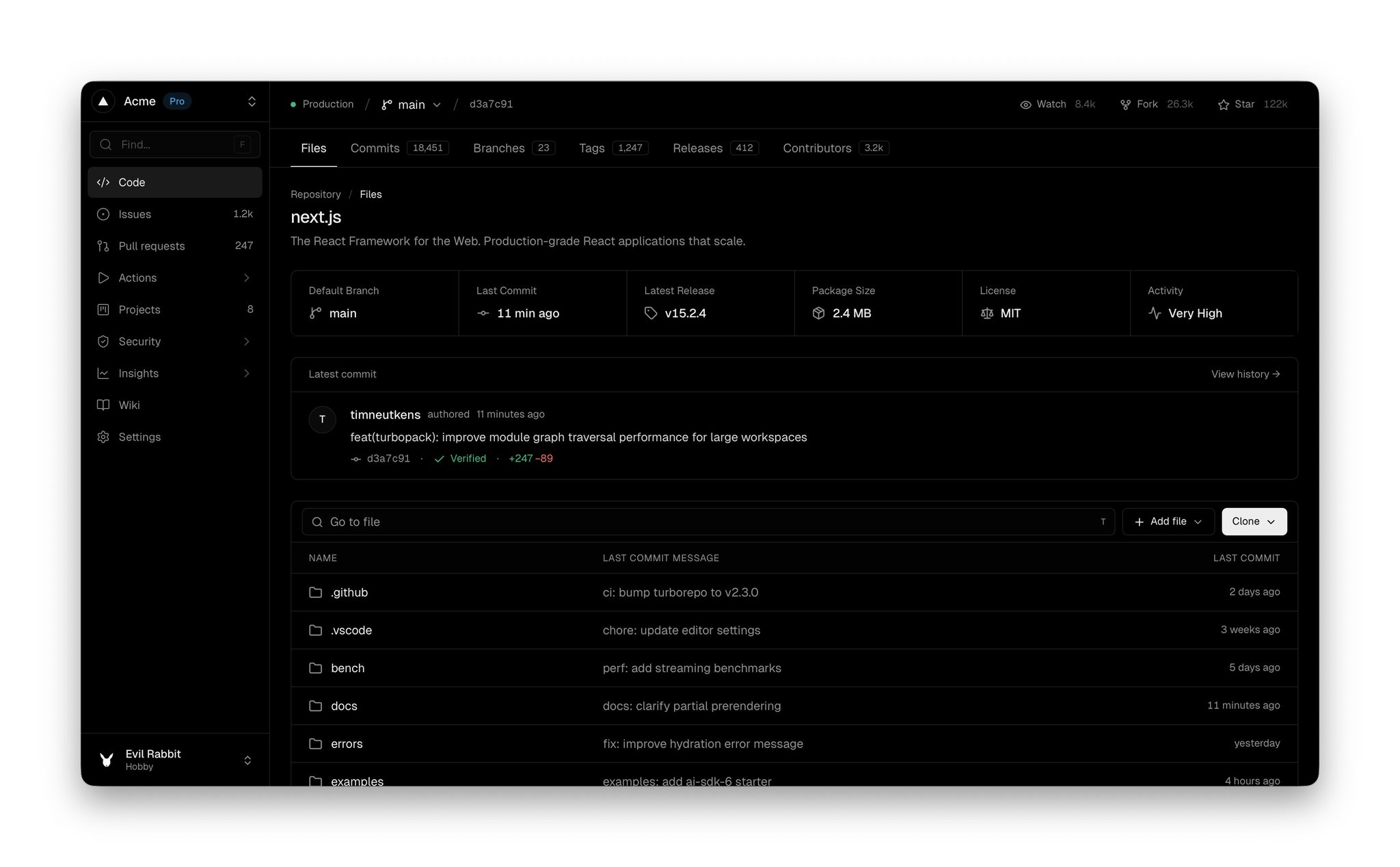
Vercel CEO asked v0 what it would look like if Vercel shipped GitHub. Two prompts. The result is predictably unsettling in a good way.
Vercel CEO 用 v0 问了两个 prompt:如果 Vercel 发布 GitHub 会长什么样。结果嘛……有点让人不安,但那种好的不安。
Cat Wu (Claude Code, Anthropic)
Claude Security is now in public beta, built directly into Claude Code on the web. Point it at a repo, get validated vulnerability findings, and fix them in the same interface where you're writing code.
Claude Security 现在已进入公开测试阶段,直接集成在网页版 Claude Code 里。对着代码库一指,能拿到经过验证的漏洞报告,还能在写代码的同一界面里直接修复。
Amjad Masad (CEO, Replit)
Replit's meta-dogfooding continues. Amjad's frame: they treat Replit as customer zero — and expect "insane ROI." The example he shares is exactly that. Also dropped "Prompt → LLC" as the new startup elevator pitch template.
Amjad 的逻辑:把 Replit 当作零号客户来用,期望获得"疯狂的 ROI"。他分享的案例印证了这一点。另外那条"Prompt → LLC"正在成为新的电梯演讲模板。
https://x.com/amasad/status/2049934937688854993
https://x.com/amasad/status/2049921597499445677
Nikunj Kothari (Partner, FPV Ventures)
All these MCPs and CLIs are making one thing clear: "big" models are going to orchestrate our lives. His progression: first terminal, then computer use, soon the entire OS. Message: be in the path of these models or you'll cease to exist.
所有这些 MCP 和 CLI 正在说明一件事:大模型将成为我们生活的指挥者。路径是:先是终端,然后是 computer use,接下来是整个操作系统。他的建议:要么进入这些模型的路径,要么消失。
Garry Tan (President & CEO, Y Combinator)
YC President on GBrain — an MIT-licensed open source knowledge wiki that pairs well with OpenClaw/Hermes-style personal AI. Three weeks in, he's confident GBrain is its own category, not competing with general-purpose retrieval tools.
YC 掌舵人在推 GBrain——一个 MIT 许可的开源知识 wiki,特别适合搭配 OpenClaw/Hermes 这类个人 AI 使用。三个星期下来,他的判断是 GBrain 自成一家,不是去和通用检索工具竞争。
https://x.com/garrytan/status/2050096324100682097
https://x.com/garrytan/status/2050095919157350644
Amanda Askell (Philosopher & Ethicist, Anthropic)
A rare personal thread from Askell — she's been seeing internet fiction written about her that's "completely made up" and asserted with confidence. Her reaction: she should be "the millionth item on people's list" of things to write fiction about, somewhere below paper cups and the right way to caulk a bathtub. Classic Askell dry humor, while noting her actual work is "top tier in terms of interestingness."
Askell 发了一条罕见的个人推文——她发现自己成了互联网同人小说的主角,内容完全虚构却写得信心十足。她的反应:自己应该只是人们写同人的百万分之一候选,甚至排在纸杯和浴室防霉之前。典型的 Askell 式冷幽默。同时她也认真地说,她做的实际工作"有趣程度是顶级的"。

Dan Shipper (CEO, Every)
Shipper's experimenting with Codex + Chronicle as a focus tracker — logging where attention goes while working. Also sharing what looks like a notable Every product launch around AI-native company tools.
Dan Shipper 在用 Codex + Chronicle 做注意力追踪——记录工作时注意力花在哪里。同时似乎有 Every 新的 AI 原生公司工具产品即将发布。
https://x.com/danshipper/status/2050010481751167187
https://x.com/danshipper/status/2049913064561258986
Aditya Agarwal (GP, South Park Commons; Ex-Facebook, Dropbox)
An episode plug for his South Park Commons conversation with Nikesh Arora, CEO of Palo Alto Networks. Core argument: AI is both the threat and the only viable solution in cybersecurity. Incumbents got it wrong when ChatGPT dropped — security was never built into AI from the start. The only way out of the current chaos is more AI.
Aditya 在推广他和 Palo Alto Networks CEO Nikesh Arora 的对话播客。核心论点:AI 是网络安全领域里的威胁,也是唯一可行的解药。传统安全厂商在 ChatGPT 出现时判断失误——安全从未被内置进 AI。走出当前混乱的唯一办法是用更多 AI。

Peter Yang (Product, Roblox)
Two practical questions from Yang: best workflow for self-updating OpenClaw (and it breaking half the time — a real problem statement), and whether anyone's cracked great YouTube thumbnail generation with GPT Image 2 yet.
Peter Yang 提了两个实际问题:如何让 OpenClaw 自我更新不频繁崩溃(这是真实痛点),以及有没有人已经搞定用 GPT Image 2 生成油管缩略图。
https://x.com/petergyang/status/2050026309615792509
https://x.com/petergyang/status/2050022980688966081
Zara Zhang (Builder)
Using ChatGPT Image 2 to make slides — her verdict: "SO fun."
Zara 在用 ChatGPT Image 2 做 PPT,评价是"太好玩了"。
PODCASTS
Training Data — "Demis Hassabis on Building DeepMind, AlphaFold, and the Final Stretch to AGI"
DeepMind 创始人 Demis Hassabis 近日登上 Training Data 播客,分享了他从游戏神童到 AGI 追梦者的完整路径。以下是本次对话的核心提炼。
The Takeaway: Hassabis 的经历证明了一条反直觉的创业原则——提前 5 年押注正确方向是天才,押注 50 年是疯子。他在 15 岁时就把 AGI 定为人生目标,然后用游戏、神经科学、学术研究绕了一大圈才回到原点。这种"先绕远路再回到核心"的策略,恰恰是 DeepMind 最终成功的隐秘原因。
最有力的一个细节:他 17 岁做的 Theme Park 卖了 1000 万份,成千上万的玩家沉浸在那个 AI 驱动的模拟世界里——他意识到,这不只是娱乐,而是人们第一次真正愿意和 AI 共存。这种体验让他确信:AI 值得他用一辈子来追求。
关于 AGI 时间线,他维持了一贯的判断:2030。"我们从 2010 年开始,认为这需要 20 年。现在看来,整个领域基本上是按计划推进的。"
AlphaFold 被问作最自豪的时刻,但 Hassabis 更兴奋的是下一步:Isomorphic Labs 正在解决药物发现的后半程——已知蛋白质结构,现在要自动设计能精准结合的化合物。"把 99% 的探索放在硅片里做,只把验证那一步留到实验室。如果能做到,药物发现时间可以从 10 年压缩到数周,甚至数天。届时所有疾病都在射程内。"
关于 consciousness,他承认自己无法给出一个完整定义,但指出了必要条件:self-awareness、self-other distinction、时间上的连续性。"我们会从行为角度接近这个问题,但关于体验层面,永远会有一道鸿沟——因为我们永远不会和人工系统有相同的基质。"
关于物理世界和信息的关系,他提出了一个独特的观点:信息可能比物质和能量更基础。"如果你从信息处理的角度看宇宙,AI 的意义就比我们以为的更深远——它本质上是在组织和理解信息。"
最后被问到 AGI 之后读什么书,他推荐了 David Deutsch 的《The Fabric of Reality》——那是他希望在 AGI 实现后能回答的问题。
DeepMind 创始人 Demis Hassabis 近日登上 Training Data 播客,分享了他从游戏神童到 AGI 追梦者的完整路径。以下是本次对话的核心提炼。
核心结论: Hassabis 的经历证明了一条反直觉的创业原则——提前 5 年押注正确方向是天才,押注 50 年是疯子。他在 15 岁时就把 AGI 定为人生目标,然后用游戏、神经科学、学术研究绕了一大圈才回到原点。这种"先绕远路再回到核心"的策略,恰恰是 DeepMind 最终成功的隐秘原因。
最有力量的一个细节:他 17 岁做的 Theme Park 卖了 1000 万份,成千上万的玩家沉浸在那个 AI 驱动的模拟世界里——他意识到,人们第一次真正愿意和 AI 共存,而这种体验让他确信:AI 值得他用一辈子来追求。
关于 AGI 时间线,他维持了一贯的判断:2030。"我们从 2010 年开始,认为这需要 20 年。现在看来,整个领域基本上是按计划推进的。"
AlphaFold 被问作最自豪的时刻,但 Hassabis 更兴奋的是下一步:Isomorphic Labs 正在解决药物发现的后半程——已知蛋白质结构,现在要自动设计能精准结合的化合物。"把 99% 的探索放在硅片里做,只把验证那一步留到实验室。如果能做到,药物发现时间可以从 10 年压缩到数周,甚至数天。届时所有疾病都在射程内。"
关于 consciousness,他承认自己无法给出完整定义,但指出了必要条件:self-awareness、self-other distinction、时间上的连续性。"我们会从行为角度接近这个问题,但关于体验层面,永远会有一道鸿沟——因为我们永远不会和人工系统有相同的基质。"
关于信息与宇宙的关系,他提出了一个独特的观点:信息可能比物质和能量更基础。"如果你从信息处理的角度看宇宙,AI 的意义就比我们以为的更深远。"
最后被问到 AGI 之后读什么书,他推荐了 David Deutsch 的《The Fabric of Reality》——那是他希望在 AGI 实现后能回答的问题。

Generated through the Follow Builders skill: https://github.com/zarazhangrui/follow-builders